
Protecting America’s Critical Infrastructure from Systemic Electronic Failure
TierOne helps critical infrastructure leaders assess, design, and implement EMP resilience for the systems they cannot afford to lose.
For boards, CIOs, CISOs, operators, utility leaders, mission-critical data center owners, and resilience leaders responsible for continuity under extreme disruption.
Rare Experience for a High-Consequence Risk
EMP resilience requires more than awareness. It requires leadership that understands infrastructure, dependencies, implementation, and the operational realities of mission-critical environments.
Rare U.S. Implementation Experience
TierOne is led by practitioners associated with the first known commercial EMP-protected data center implementations in the United States financial sector.
Executive + Engineering Lens
We combine senior enterprise leadership experience with world-class EMP engineering expertise to translate technical risk into boardroom-ready action.
End-to-End Lifecycle Delivery
From executive education and exposure assessment to mitigation planning, implementation oversight, validation, and sustainment.
Critical Infrastructure Focus
We support organizations whose failure would not remain isolated, because they operate systems other sectors depend on.
The Threat Environment Has Changed Faster Than Infrastructure Assumptions
Modern infrastructure was not designed for today’s threat environment. Adversaries increasingly employ asymmetric strategies, advanced weapons technologies, and disruption methods aimed at complex, electronically dependent systems.
Modern infrastructure was not designed for today’s threat environment.
Minimal redundancy, deep electronic dependency, and operational interconnection have created a risk environment far different from what many continuity assumptions were built around.
Modern Civilization Depends on Fragile Electronic Infrastructure
Organizations have invested heavily in modernization, cybersecurity, cloud adoption, automation, and digital efficiency. Far fewer have evaluated whether their most critical systems can continue operating through severe electromagnetic disruption.
Efficiency has outpaced resilience.
That gap matters because EMP does not behave like a routine outage. When electronic controls, communications pathways, and digital infrastructure degrade together, continuity assumptions can fail at the same time.
When electronic systems fail together, consequences cascade.
Electronic Controls
Operations increasingly rely on digital controls, automation, sensors, and managed switching environments.
Communications
Response, coordination, public messaging, and routine operations all depend on resilient communications pathways.
Digital Infrastructure
Applications, data centers, cloud services, and identity systems now sit at the center of continuity planning.
The Silent Flash: From Awareness to Resilience
A practical, executive-level introduction to electromagnetic pulse risk, infrastructure dependency, and the resilience gap facing modern organizations.
Written to help leaders understand why efficient, highly connected infrastructure can become fragile under extreme electromagnetic disruption, The Silent Flash serves as a conversation starter for boards, operators, and critical infrastructure teams evaluating continuity risk.

How EMP disruption can cascade across America’s critical infrastructure
This executive visualization illustrates how a severe EMP impact can first destabilize the grid, then ripple through foundational lifeline systems, and ultimately spread into broader sector families that depend on power, communications, water, and digital infrastructure.
Most continuity plans assume external dependencies recover. This visualization shows what happens when they do not.
An EMP event first strikes the electrical backbone. Initial voltage disturbance and control-system disruption create uncertainty before wider consequences are visible.
Guiding Organizations from Awareness to Resilience
A disciplined 6-step lifecycle process that moves leaders from risk awareness into engineering, implementation, validation, and sustainment.
Understand the Risk. Establish the Baseline.
Executive briefings designed to build awareness using business, fiduciary, operational, and strategic language.
- Executive EMP awareness briefings
- Boardroom-ready threat framing
- Critical infrastructure context
- Risk vocabulary for leadership alignment
Identify Vulnerabilities. Quantify Exposure.
Detailed assessment work to identify where infrastructure, facilities, and critical systems are most exposed.
- Asset inventory and criticality review
- Dependency mapping and vulnerability analysis
- Sector-aligned risk scoring
- Executive-ready findings and recommendations
Protection. Design for Resilience.
Translate assessment results into engineered EMP protection architecture and phased mitigation plans.
- EMP shielding and facility hardening concepts
- Grounding and surge mitigation planning
- Architecture and implementation sequencing
- Design documentation support
Build the Protection. Reduce the Risk.
Execution support to move from concept into operational deployment with strong project discipline.
- Installation oversight
- Vendor and partner coordination
- Program and project management discipline
- Documentation and implementation governance
Trust but Verify.
Post-implementation validation to confirm the protection performs as intended and identify residual gaps.
- Protection effectiveness testing
- Engineering review and verification
- Degradation identification
- Audit-ready validation reporting
Protect the Protection.
Ongoing sustainment to ensure the resilience posture remains current as systems, infrastructure, and risks evolve.
- Periodic reassessment
- Degradation monitoring
- Change-impact analysis
- Ongoing advisory support
Request a Confidential Executive EMP Briefing
A focused discussion for boards, operators, and infrastructure leaders evaluating EMP exposure, continuity risk, and resilience priorities.
Supporting Leaders Across All 16 Critical Infrastructure Sectors
TierOne supports owners, operators, regulators, security leaders, and strategic suppliers across the systems modern civilization depends on. Our work is especially relevant for organizations with high consequence of outage, complex external dependencies, long restoration risk, or public-facing continuity obligations.
Core utilities and digital systems that enable nearly every other sector.
Energy
Generation, transmission, and control environments.
Water & Wastewater Systems
Treatment, pumping, control, and continuity systems.
Communications
Voice, data, routing, and coordination pathways.
Information Technology
Digital infrastructure, computing, and control systems.
Operational systems that move people, goods, services, and essential health resources.
Transportation Systems
Mobility, routing, fueling, signaling, and logistics.
Healthcare & Public Health
Care delivery and public health operations.
Food & Agriculture
Production, refrigeration, processing, and distribution.
Chemical
Industrial processes and critical materials handling.
Sectors that sustain production capacity, financial flow, built environments, and economic continuity.
Critical Manufacturing
Production ecosystems with strategic importance.
Financial Services
Payments, settlement, and digital economic operations.
Commercial Facilities
Large-scale commercial environments and business sites.
Dams
Water flow, flood management, and related infrastructure.
Institutions and systems tied to public continuity, response, national security, and high-consequence oversight.
Government Facilities
Administration, command, and continuity of functions.
Emergency Services
Response, dispatch, and operational readiness.
Defense Industrial Base
Industrial and support capabilities tied to defense readiness.
Nuclear Reactors, Materials & Waste
Highly sensitive control and monitoring environments.
Illustrative Current Protection vs. Remaining EMP Exposure Gap
Every critical infrastructure sector is essential. Every sector is vulnerable. This illustrative model shows where sectors may generally sit relative to DHS EMP Protection Levels 1-4, and how much exposure may remain above current posture.
Current Sector Protection Posture
Select a sector to see its illustrative current protection posture against DHS EMP Protection Levels 1-4. Choose All Sectors to view a composite sector posture. Use these DHS protection concepts as a general reference only.
All Sectors
View DHS Protection Level Definitions
Use this as a reference for interpreting the sector posture gauge. Sector placements are illustrative current-posture estimates, not official DHS sector ratings.
Level 1
Entry-level protection posture. Focus is on baseline practices, procedures, backup readiness, and limited EMP-specific controls.
Level 2
Improved protection posture. Typically adds stronger surge protection, filtering, backup power, protected communications paths, and continuity measures.
Level 3
Shielded civil protection posture. Often associated with shielded racks, rooms, or facilities and at least 30 dB attenuation through high frequencies.
Level 4
Highest hardened protection posture. Typically aligned to military-style hardening concepts and 80+ dB attenuation for missions with extremely low outage tolerance.
Generate an Executive Planning Estimate
Use this tool to generate a directional planning estimate for EMP resilience by sector, facility type, scale, and implementation scope. Outputs are intended to support early executive discussion around investment range, staffing effort, sequencing, and timeline.
Model Directional Operational and Financial Exposure
This executive scenario tool models directional exposure under severe EMP disruption. Use it to explore potential asset loss, business interruption, restoration pressure, and cross-sector dependency effects under different operating assumptions.
Designed for boardroom discussion and early risk framing — not as a substitute for live engineering assessment or operational validation.
Elite Protection. Proven Expertise. Mission-Driven Resilience.
To fortify the nation’s critical infrastructure through elite talent, advanced technology solutions, and unparalleled EMP and implementation expertise—driven by a deep commitment to safeguarding America from man-made threats and destabilizing intrusions.
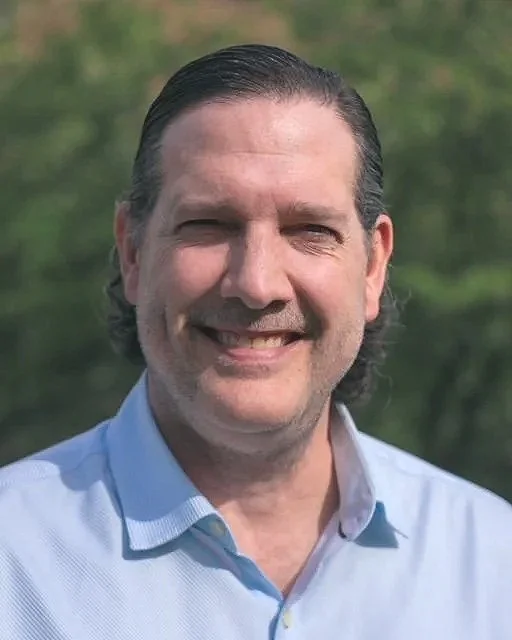
Founder, President
With 37 years of experience across multiple facets of Information Technology—including executive leadership, infrastructure, applications, databases, cybersecurity, governance, compliance, and risk—Jeff Kohl brings a rare combination of strategic vision and hands-on implementation leadership to TierOne Resiliency Group.
Jeff has spent roughly a decade serving as a Senior Executive and eight years as a senior consultant, helping organizations navigate complex business, operational, and technology challenges. His leadership has consistently required close partnership with Legal, Audit, Compliance, HR, Finance, and regulated business functions, giving him a uniquely enterprise-wide view of risk, accountability, and execution.
He has also received multiple leadership awards for innovation in infrastructure solutions during his tenure inside Fortune 500 organizations, reflecting both his technical depth and his ability to drive high-value outcomes in demanding environments.
Jeff’s motivation is not merely professional. It is deeply personal. His work is driven by a profound commitment to help protect the nation he loves from threats intended to destabilize critical systems, undermine continuity, and weaken the infrastructure that modern civilization depends upon.

Lead / Independent Consultant
Former Director of Government & Specialty Business Development for ETS-Lindgren, Michael Caruso is a recognized leader in RF shielded enclosure systems, EMP protection, and anechoic test chamber solutions. He brings more than 43 years of experience in project management, engineering, advanced technical applications, and business development.
Michael has built a national and international reputation for translating highly technical electromagnetic protection concepts into practical solutions for critical environments. His background spans not only business development and engineering leadership, but also extensive Electromagnetic Compatibility (EMC) testing experience gained while serving as Vice President of Operations for an EMC laboratory.
He has published multiple white papers and technical articles and has testified before the U.S. Congress on the need for EMP protection of the nation’s critical infrastructure.
Michael is also a member of Arizona InfraGard and formerly served as Energy Sector Chief, further underscoring the depth of his engagement with infrastructure security, resilience, and public-private coordination.
Across his career, he has been known for helping clients interpret emerging threats, evaluate technologies, develop partnerships, and create high-value technical solutions in high-consequence environments.
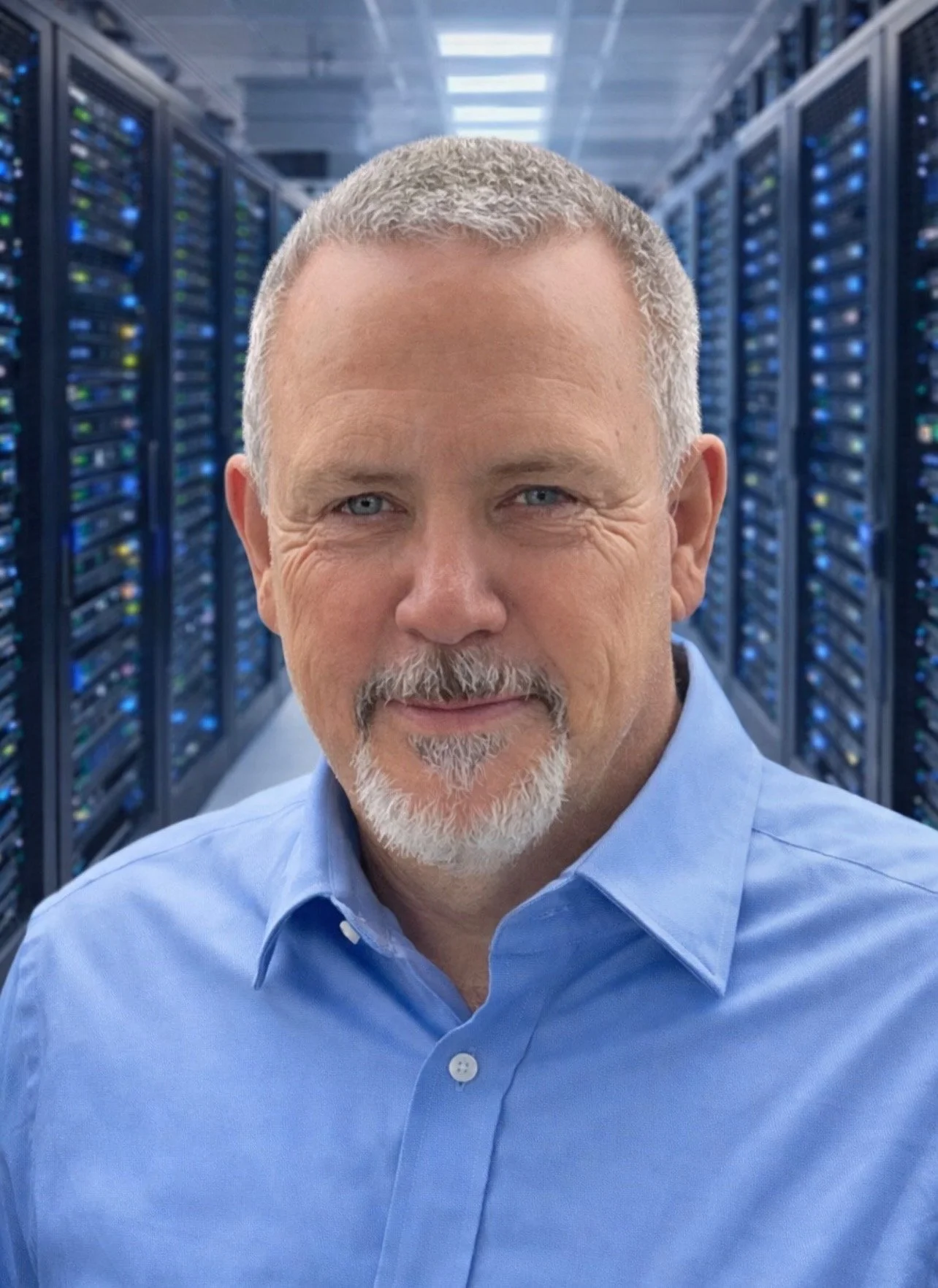
Lead / Independent Consultant
Scott’s professional roles have spanned engineering and implementation, with a strong emphasis on data center and infrastructure leadership. His experience reflects a long track record of helping organizations improve resilience, reduce operational risk, and modernize critical technology environments.
Scott has led implementation of many large-scale data center improvements, ensuring stronger risk mitigation and more credible recovery capabilities across complex environments.
He has also led merger and acquisition efforts that included relocation of data centers, elimination of service redundancies to gain operational efficiencies, achievement of cost reduction targets, and mitigation of enterprise risk.
These initiatives included network upgrades that increased capacity and enabled more granular segmentation, adoption of solid-state storage to significantly improve performance and recovery options while lowering administrative costs, mainframe replication enhancements that materially strengthened recovery capabilities, implementation of an automated disaster recovery solution to advance replication and recovery performance, redesign of disaster recovery architecture to align with evolving business RTO, RPO, and risk tolerance requirements, and leadership of new data center planning, build-out, and migration efforts.
Scott brings practical implementation discipline to TierOne’s work—particularly where infrastructure modernization, resilience architecture, execution sequencing, and recovery design must all come together in a credible operating model.
Request a Confidential Executive EMP Briefing
A focused discussion for boards, operators, and infrastructure leaders evaluating EMP exposure, continuity risk, and resilience priorities.
Direct Contact Information
For confidential executive discussions, resilience inquiries, or follow-up on assessments and modeling, contact TierOne directly using the information below.
Cincinnati Office
524 Chaswil Drive
Cincinnati, Ohio 45255